24 hours WhatsApp,Wechat quick online service

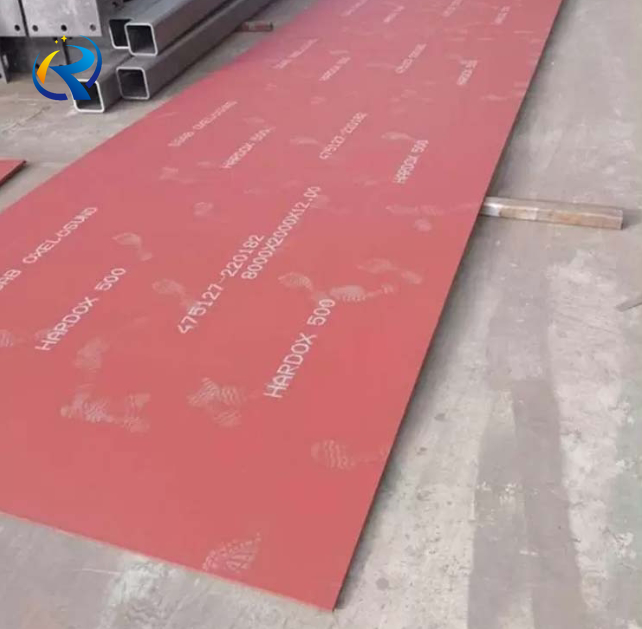
Before cutting, welding, or forming Hardox 500, quality checks are essential to reduce fabrication risks and protect end-use safety. For quality control and safety management teams, verifying plate grade, thickness tolerance, surface condition, flatness, traceability, and certification can prevent costly errors and downtime. This guide outlines the Hardox 500 inspections that matter most before fabrication begins.
Why quality checks change by application scenario
Hardox 500 is not inspected in a vacuum. A plate intended for mining liners, dump truck bodies, recycling equipment, or agricultural wear parts may carry the same grade name, but the fabrication risks are different. For quality teams, that means the pre-fabrication checklist should match the service environment, expected impact load, and forming complexity rather than rely on a one-size-fits-all receiving inspection.
In high-abrasion service, even a small deviation in hardness consistency or plate identification can affect wear life over 6 to 24 months of operation. In safety-sensitive structures, flatness and weld-edge condition may matter more because distortion or hidden lamination can interrupt fabrication schedules within the first 1 to 3 production shifts. The point is simple: the same Hardox 500 plate can create different downstream risks depending on where it will be used.
For companies handling multiple steel categories, inspection logic should also stay disciplined across materials. For example, buyers who also source SPCC Cold Rolled Steel Coil for lighter fabrication projects often already use document control, batch tracking, and dimensional verification workflows. Those same habits should be applied with stricter acceptance criteria when receiving Hardox 500 for heavy-duty wear applications.
Core receiving priorities before fabrication
- Confirm grade marking, heat number, and mill traceability on 100% of plates in the lot.
- Check thickness, length, width, and flatness against order tolerance before nesting begins.
- Inspect surfaces, edges, and cut zones for rust, gouges, laminations, or transport damage.
- Review certificates and applicable test records before plates move to cutting or welding stations.
Three common Hardox 500 application scenarios and what to inspect first
Different industries prioritize different failure modes. A recycling shredder chute may tolerate cosmetic marks but not hardness variation. A truck body may accept minor edge rework but not poor flatness that slows forming. A quarry bucket liner may require stronger control of thickness consistency because uneven wear can shorten replacement cycles by several weeks.
The table below helps quality control and safety managers align Hardox 500 checks with the actual fabrication and service scenario. This approach supports faster release decisions and reduces disagreement between purchasing, warehouse, and production teams.
This comparison shows why Hardox 500 inspection should be tied to operational use, not only purchase description. In many workshops, the first 4 checks can decide whether the material is released in the same day or held for clarification. That is especially important when fabrication slots are booked only 24 to 72 hours in advance.
For projects with mixed plate thicknesses, scenario-based segregation in the warehouse also helps. Marking material by end-use area reduces the chance of a wrong plate entering a critical assembly, which is a common root cause of rework in medium-volume fabrication lines.
Inspection points that matter most before cutting, welding, or forming
Grade, dimensions, and traceability
The first check is basic but decisive: make sure the received plate is actually Hardox 500 and not a lower or adjacent wear grade. Review plate stamping, heat number, packing labels, and mill documentation together. A mismatch at this stage can be corrected in hours; after cutting, the same mistake may cost several days of schedule loss and scrap.
Thickness tolerance should be checked at multiple points, especially on plates above 10 mm or on lots intended for wear liners where uniform service life matters. Measuring only one corner is not enough. A practical rule is to verify at least 3 to 5 points per plate on critical jobs, then increase sampling if any deviation trend appears in the batch.
Traceability should remain intact from unloading to nesting. If markings will be removed during blasting or cutting, transfer identification to a controlled tag or map first. Safety managers should treat traceability gaps as a process risk, because missing material history makes later incident review far more difficult.
Surface, edge, and flatness checks
Surface inspection should focus on defects that influence fabrication or service life: deep scratches, pitting, rust scale, lamination indications, and impact damage from transport. Edges deserve extra attention because edge cracking, heavy burrs, or corner damage can interfere with fit-up and increase grinding time by 15 to 30 minutes per plate in some workshops.
Flatness is especially important when Hardox 500 will be bent, lined up with structural members, or assembled into long wear panels. Excessive waviness can force heat correction or repeated clamping, both of which raise safety exposure. In practical fabrication planning, poor flatness often creates more disruption than a minor cosmetic surface issue.
If your facility also processes general industrial products such as SPCC Cold Rolled Steel Coil, keep separate receiving standards by material family. Hardox 500 requires a heavier emphasis on wear-grade confirmation and fabrication risk assessment than standard cold rolled steel used in lighter-gauge components.
How to match inspection depth to risk level
Not every order needs the same inspection depth. A replacement liner for an internal maintenance shutdown may need accelerated verification within 8 hours, while a large export fabrication project may justify a fuller review of certificates, dimensions, and condition before material release. The key is to match inspection effort to business risk and consequence of failure.
The following matrix can help teams decide how much control to apply before Hardox 500 enters fabrication. It is useful for balancing production speed with quality assurance, especially when supply chains involve multiple warehouses, processing vendors, or cross-border shipments.
This framework helps quality teams justify why some Hardox 500 lots move faster while others require hold points. It also improves communication with procurement and project management, because inspection intensity is linked to scenario, not personal judgment.
A disciplined process is especially valuable for companies like Shandong Ruilian Metal Products Co., Ltd., which support manufacturing and supply chain services across multiple steel products and export regions. With an integrated system covering sourcing, processing, warehousing, and distribution, pre-fabrication control becomes a practical tool for reducing handover risk between stages.
Common misjudgments and a practical action plan
One common mistake is assuming that a complete certificate alone is enough. Documents matter, but visible condition, dimensional conformity, and marking integrity still need on-site confirmation. Another mistake is checking only the top plate in a bundle. If the lot includes 20 to 50 plates, hidden damage or mixed material can remain undiscovered until production starts.
A second misjudgment is underestimating fabrication sequence risk. For Hardox 500, issues with plate identity or edge condition become more expensive after the first cut, and even more serious after welding. That is why many experienced teams use a release gate before fabrication, with sign-off from warehouse, QC, and production in 3 linked steps.
A practical pre-fabrication action plan should include the following points:
- Verify material identity and heat number against purchase and job documents.
- Measure critical dimensions and record any out-of-tolerance findings immediately.
- Inspect surface, edges, and flatness under good lighting before release.
- Review certificates, application needs, and end-use risk level as one package.
- Separate accepted, on-hold, and rejected plates to avoid accidental use.
If you need support with Hardox 500 material confirmation, application-based selection, certification review, delivery timing, or processing coordination, contact us. Shandong Ruilian Metal Products Co., Ltd. can help you discuss plate parameters, suitable steel product options, documentation requirements, sample support, and quotation details based on your actual fabrication scenario and safety priorities.